Skills data and employer demand: Ukraine strengthens its reskilling system




Rapid changes in the labour market, population displacement, transformation across industries, and labour shortages are increasing the need for reskilling and upskilling. At the same time, the effectiveness of such programmes depends not only on the number of training opportunities available, but also on how accurately they reflect people’s existing skills, career goals, and actual employer demand.
This approach is embedded in Ukraine’s Employment Strategy through 2030. It provides for a shift towards a demand-driven model of skills development, stronger labour market forecasting, adult reskilling, and the use of data to provide more personalised support to jobseekers.
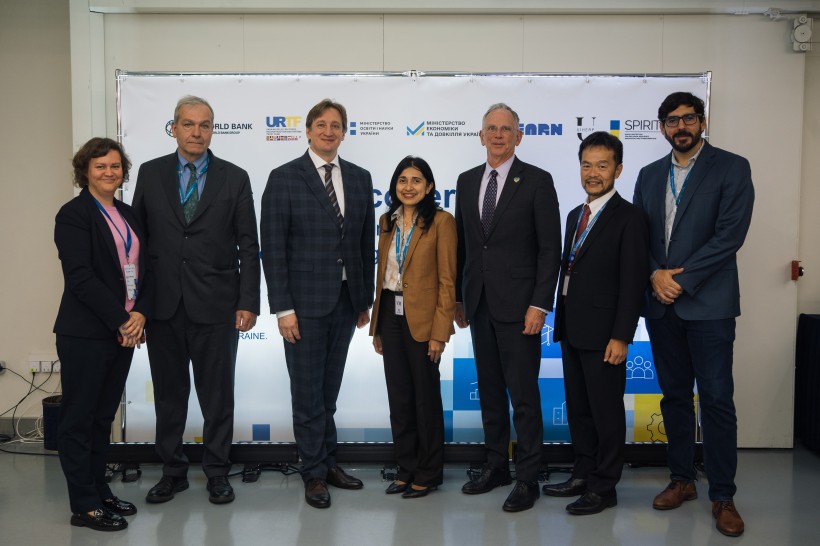
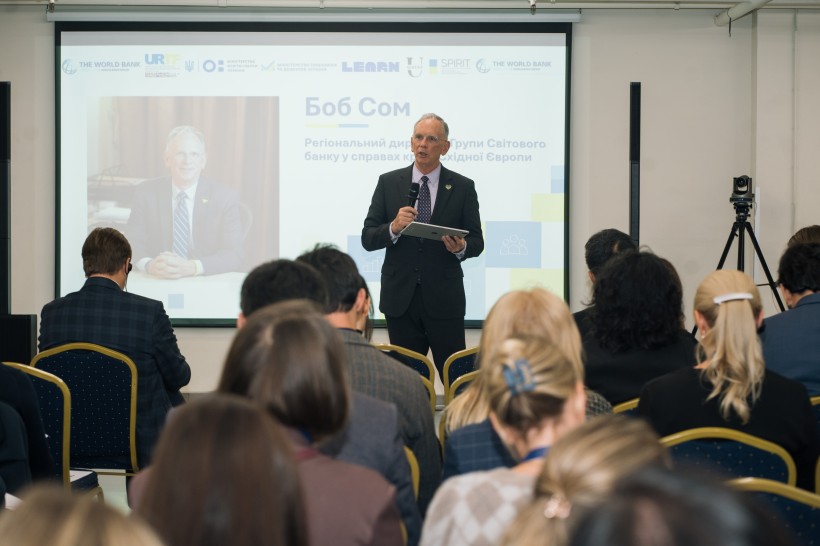
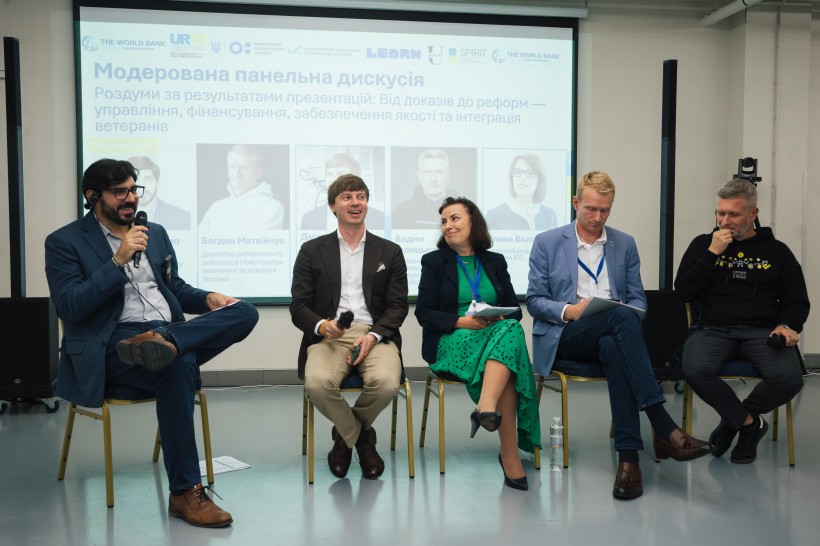
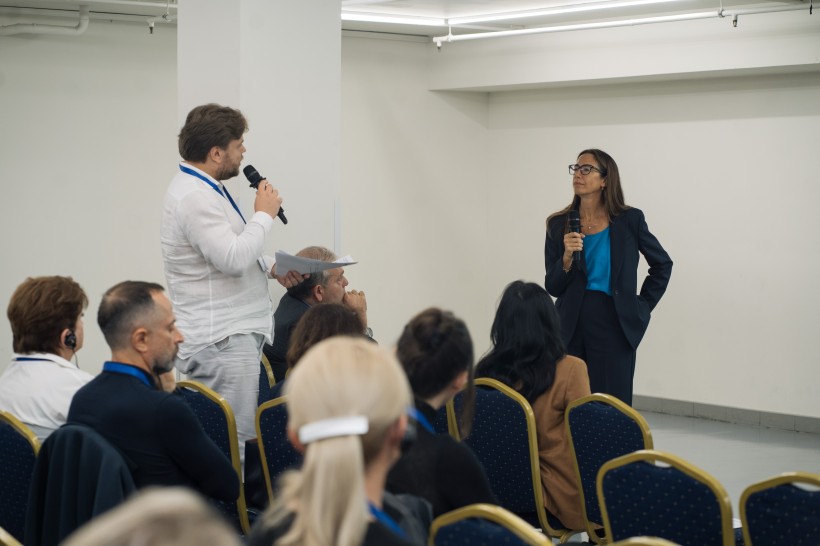
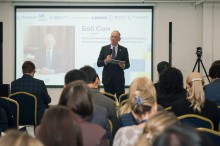
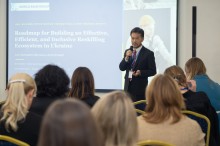
On 22 September, the Ministry of Economy and Environment of Ukraine, the Ministry of Education and Science of Ukraine, and the World Bank held the Skills for Recovery: Evidence and Policy Priorities for Ukraine’s Upskilling and Reskilling System event in Kyiv. Representatives of government, business, social partners, and international organisations discussed how to make Ukraine’s reskilling and upskilling system more responsive to the needs of people and employers.
The discussion drew on three complementary pieces of World Bank analysis: an Active Labor Market Program assessment, a pilot of a digital skills-matching tool carried out with the State Employment Service, and a system-wide diagnostic of Ukraine's reskilling ecosystem, known as the BOOST study. Together, they look at the challenge from both ends, how the system is organised and financed, and how it works for an individual trainee and jobseeker.
“In reskilling, we do not need one-size-fits-all solutions. We need more precise tools built on data about people’s skills and employers’ needs. This is where our cooperation with the World Bank is particularly valuable: together, we can test approaches in practice and use the results to shape the new employment policy,” said Oleksandr Kravchenko, Minister of Economy and Environment of Ukraine.
The first study “Promoting Skills Development and Employment in Ukraine: A review of Active Labor Market Programs (ALMPs)” assesses 13 programs implemented through the State Employment Service, including a training voucher for employed workers and a vocational training program for the unemployed. Spending in ALMPs increased from UAH 0.5 billion to UAH 7 billion between 2021 and 2024. The study finds that this increased investment was effective in terms of labor market outcomes and fiscal returns as beneficiaries’ reported tax and social contributions outpaced program costs within a year. IN The review finds strong results for skills development programs. Between 2022 and 2024, approximately 87,000 unemployed individuals and 47,000 workers were trained to acquire new skills and improve their employability. Training programs for unemployed individuals generated positive labor market outcomes, with 85% of training graduates entering formal employment within one month of completing training and 69% remaining employed six months later, according to administrative data from the Pension Fund of Ukraine. For employed workers, training vouchers were associated with a 27% increase in earnings.
Another key input to the discussion was the World Bank’s pilot of the SkillLab digital app to assist career guidance, and job matching services. The pilot was implemented together with the State Employment Service in Lviv and Donetsk regions. The tool created a structured skills profile based on the European ESCO classification, and identified potential career pathways and skills gaps. The pilot found that 86% of users with sufficiently detailed profiles already possessed at least half of the skills required for the occupation identified as their best match by the system. This suggests that a lack of competencies is not always the main barrier to employment. In many cases, the challenge is to accurately identify the skills a person already has and connect them to relevant opportunities in the labour market.
The impact evaluation did not identify a statistically significant impact of access to the digital tool alone on formal employment, wages, or job stability. The WB study points to incomplete take-up, limited employer engagement, and differences in labour demand across regions as some of the factors behind these results. At the same time, users actively engaged with the tool’s skills assessment, professional profiling, and CV-building functions. The pilot also demonstrated the important role of career counsellors in supporting the use of such tools: more than 300 State Employment Service specialists in the two pilot regions received relevant training.
“The pilot results demonstrate the potential of an approach built around a person’s skills, rather than only their previous job title or formal qualification. At the same time, technology alone cannot solve the employment challenge. It delivers better results when it is integrated into employment service delivery, supported by counsellors, and connected to employers and real training opportunities,” said Bob Saum, World Bank Regional Director for Eastern Europe.
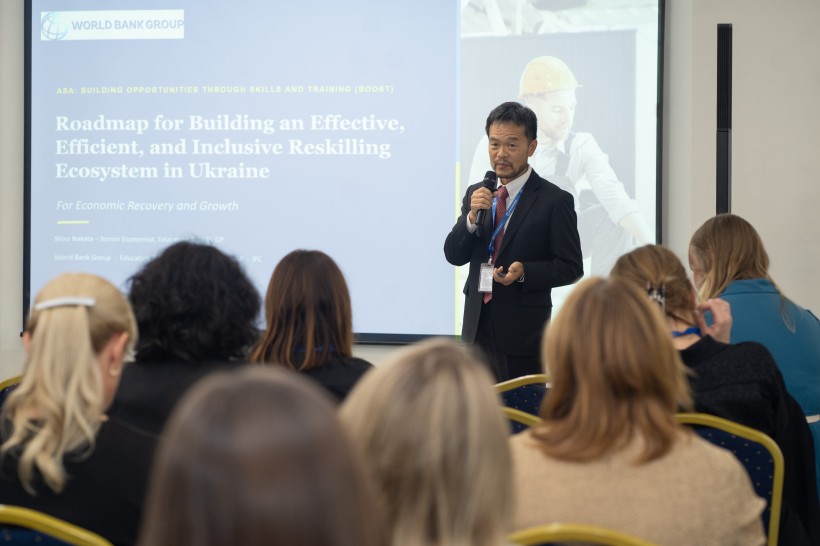
The BOOST study, Roadmap for Building an Effective, Efficient and Inclusive Reskilling Ecosystem in Ukraine for Economic Recovery and Growth, published in 2026, proposes a roadmap of ten actions grouped into three areas: strengthening private sector integration and governance, improving financing and data systems, and enhancing service delivery.
The BOOST study shows that the foundation for developing Ukraine's reskilling system is already taking shape. Around 60% of vocational and higher education institutions offer short-term reskilling or upskilling programmes. Most institutions can launch a new short-term programme within three months.
Business is becoming more actively involved as well. The share of enterprises organising training for their employees has risen from approximately 24% before the full-scale invasion to 34%, and among large companies around 72% of enterprises run such programmes. Individual companies have already created their own training centres and programmes tied directly to human resource and production needs. However, these programmes are generally not recognised within the publicly financed system, and their graduates' skills are not always formally validated. Ukraine's national qualifications system is expanding rapidly, with more than 200 qualification centres, but coverage remains uneven across the regions.
These developments create an opportunity for the next step: better connecting state and corporate programmes, the qualifications system, and the financing of training. The BOOST study has proposed a roadmap of 10 steps covering the development of partnership with business, a system for recognising non-formal learning, financing, data on skills, and phased pathway for access to training for veterans.
"A certificate must mean something, to the person who earns it and to the employer who receives it. That is why we are strengthening independent assessment of qualifications, recognising skills acquired in the workplace, and opening our vocational and higher education institutions to adult learners. The new Law on Vocational Education gives us the tools; the World Bank's analysis helps us use them where they will make the most difference — including for veterans and displaced people, for whom upskilling and reskilling supported with psycho-social support is often the fastest route back to work," said Andrii Butenko, Minister of Education and Science of Ukraine.
Lastly, the findings of the three studies and their recommendations can also inform the further development of Obrii, Ukraine’s unified digital labour market system, to be strengthened with information on skills training. Obrii aims to bring together information on vacancies, skills, and training opportunities, career guidance, and digital employment services, while helping the government better target reskilling programmes to the needs of people and the economy.
The World Bank's Education and Social Protection teams are actively helping to build a strong foundation for Ukraine's skills development through projects such as LEARN, supporting school and preschool education; UIHERP, helping transform higher education, including the establishment of 12 Campuses of Excellence (CampeX); and SPIRIT technical assistance to strengthen social protection, employment services, and support for veterans.