First Experiences of Implementing Supervisory Boards in VET Colleges




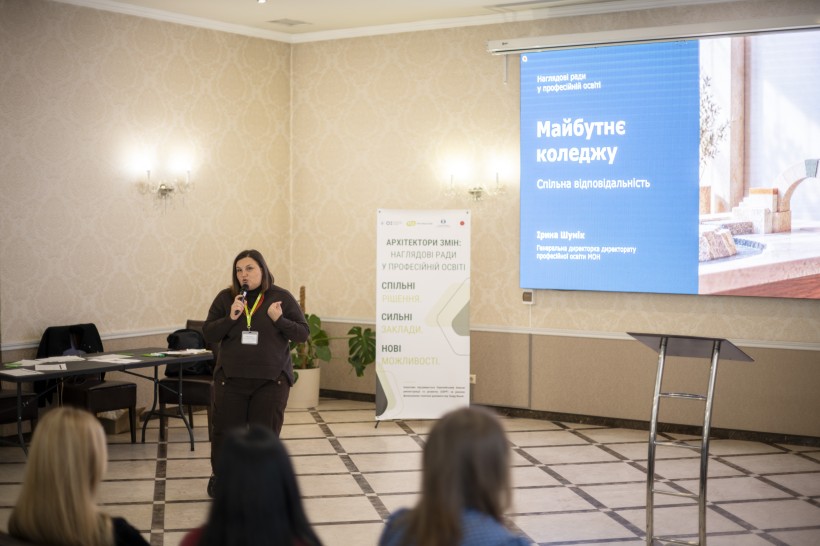













The first results of implementing supervisory boards in 15 pilot VET institutions were presented at the “Architects of Change: Supervisory Boards in Vocational Education” forum. The pilot initiative covers VET colleges in four Ukrainian regions: Volyn, Dnipropetrovsk, Zakarpattia and Lviv. The main focus was on engaging employers in college governance and moving from board formation to practical work.
The pilot experience under the GO VET project demonstrated that effective supervisory boards require clearly defined responsibilities, transparent procedures and effective cooperation between governing authorities, college leaders and local businesses.
“By involving employers in supervisory boards, VET colleges will be able to update their training programmes to reflect the actual needs of businesses. This will enable students to acquire relevant vocational skills and help Ukraine develop the skilled workforce needed for its recovery and economic development,” said Iryna Shumik, Director General of the Directorate for Vocational Education at the Ministry of Education and Science of Ukraine.
During the forum, representatives of the pilot colleges shared their experience of engaging employers in supervisory boards and moving from board formation to practical work. In a practical session, participants worked through cases involving supervisory boards, analysed different situations and practised making informed decisions.
“Employers need to understand what they can actually influence through their participation in a supervisory board. That is why the conversation should start with specific needs: what specialists businesses require, what needs to change in training and what we can achieve together. This is how we build interest in working together,” said Serhii Antoniuk, Director of the Kovel Vocational Education and Training Centre.
To support VET colleges in this process, a practical guide for supervisory board members has been developed. It provides a practical roadmap for the first 90 days of a board’s work, from holding the first meeting and planning activities to identifying priority issues, making decisions and monitoring their implementation.
The guide is available in Ukrainian on the Vocational Education Reform platform.
The forum took place within the GO VET project, “Good Governance of Vocational Education Institutions through the Establishment of Effective Supervisory Boards”, implemented by Finn Church Aid (FCA Ukraine) in cooperation with the Ministry of Education and Science of Ukraine. The project is supported by the EBRD through technical assistance funding provided by Japan.