MoES secures US$286 million in additional financing to support education under the LEARN Program
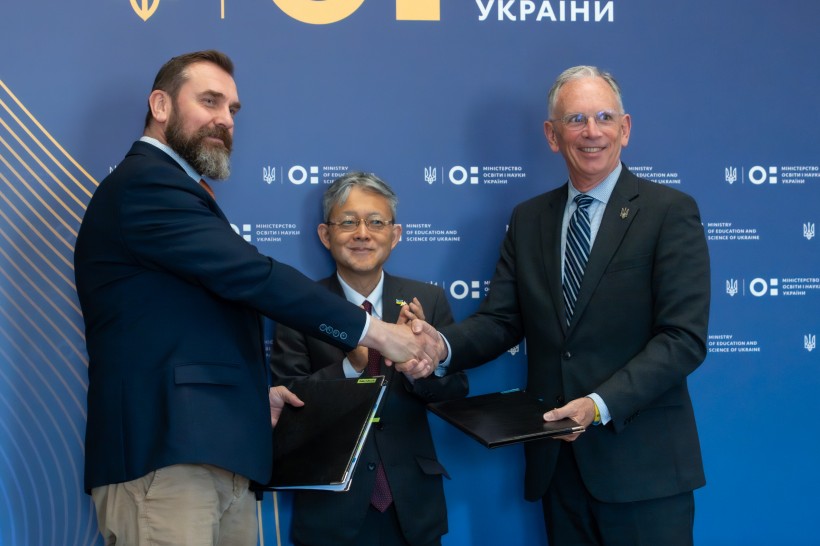
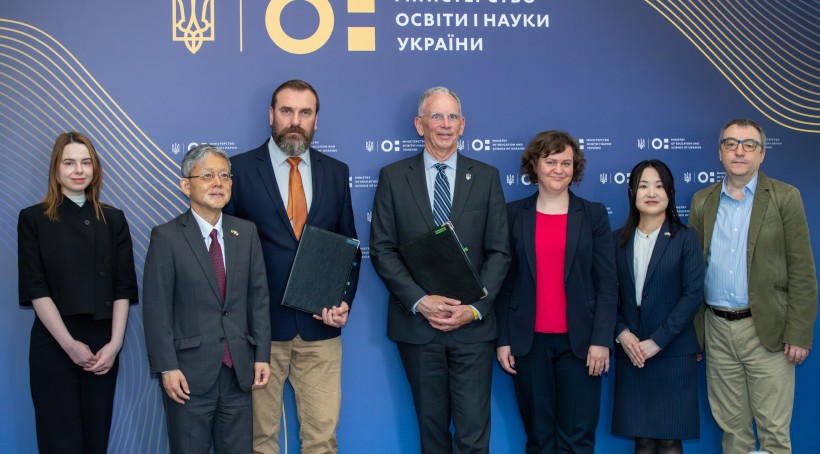
Ukraine will receive US$286 million in additional financing for the education sector following the achievement of key results by the Ministry of Education and Science of Ukraine under the LEARN Program — "Lifting Education Access and Resilience in Times of Need in Ukraine."
As a contribution to the deliverables of the Ukraine Recovery Conference 2026, the corresponding agreement was signed between Ukraine and the International Bank for Reconstruction and Development, a member of the World Bank Group. The funds will be channeled to the general fund of the State Budget of Ukraine and used to support the education sector. This additional financing is part of Japan’s continued and strategic commitment to Ukraine’s education sector and broader recovery. Japan has been a key partner since the launch of LEARN: in 2024, it supported the program with US$235 million. Today, Japan continues this support through the additional financing in 2026, mobilizing US$286 million, helping sustain reform momentum at scale.
"The World Bank supports not just individual education projects, but systemic transformations in Ukraine's education system. The financing mechanism is designed so that the government receives additional funds upon achieving specific results agreed at the time of signing the financing agreement. Since the launch of the program in September 2024, Ukraine has achieved a number of key indicators — in teacher training, textbook provision, free bus transportation and the development of school infrastructure which is essential for ensuring access to in-person learning.
These results directly support the implementation of the New Ukrainian School (NUS) reform, which is critical for improving education quality and aligning it with EU standards, while also laying the foundation for long-term systemic change.
This has enabled the mobilization of additional World Bank financing, which is channeled into the state budget and supports the continued implementation of education reforms. The signed agreement represents a continuation of efforts to mobilize new financing for the education sector," said Oksen Lisovyi, Minister of Education and Science of Ukraine.
The program is implemented through the Program-for-Results (PforR) financing instrument, which disburses funds upon the achievement of agreed indicators. According to the Agreement, the new financing will be disbursed this year upon achievement of:
- training of 60,000 Grade 9 teachers to NUS standards;
- free NUS-aligned textbooks for 300,000 Grade 9 and 300,000 Grade 4 students;
- free school-bus transportation expanded to ~50,000 students (up 32,000);
- updated 2026 shelter and school-bus subvention criteria, prioritizing buses for children with disabilities;
- national scale-up of preschool reform via a new strategic framework and infrastructure standards.
Earlier, Ukraine had already received US$451 million under the LEARN Program, of which US$389.9 million was disbursed through the PforR mechanism for achieving results related to shelter modernization, procurement of school buses, printing of NUS-aligned textbooks, and teacher training. With this new agreement, total LEARN Program financing for Ukraine reaches US$737 million. As of March 2026, the program has already delivered concrete results:
240,425 Grade 7–8 teachers trained to NUS standards;
free NUS-aligned textbooks provided to 779,098 Grade 7–8 students;
free school-bus transportation for 18,112 students (including 866 children with disabilities);
shelter access meeting minimum safety standards for 12,007 students and teachers.
"The World Bank is proud to stand with Ukraine in building the New Ukrainian School — an education system that will equip the next generation with the skills to lead the country's future. With this additional financing, we are also extending LEARN's reach to early childhood education, investing in children's development from their very first years while enabling more parents, especially women, to return to the workforce. Education is at the heart of Ukraine's recovery and its long-term prosperity," said Bob Saum, World Bank Regional Country Director for Eastern Europe.
“Ukraine’s recovery is not only about rebuilding infrastructure; above all, it is about supporting people, the younger generation, and the teachers who educate and nurture them. Japan is proud to provide an additional USD 286 million in financing under the LEARN programme. This support reflects our confidence in the continuation of education reform in Ukraine and in the importance of achieving tangible results that expand learning opportunities for children across the country,” added Masashi Nakagome, Ambassador Extraordinary and Plenipotentiary of Japan to Ukraine.
The NUS reform is a core component of the LEARN Program and aims to transform the entire school education system — from curriculum content to teaching methods and teacher professional development — requiring comprehensive support through textbooks, teacher training, and modernization of the learning environment. In parallel, LEARN's support for preschool education focuses on modernizing the network of early childhood institutions, improving efficiency, and adapting services to the needs of families, which also contributes to labor force participation and long-term human capital development.
The LEARN Program, supported by the World Bank and the Ukraine Relief, Recovery, Reconstruction and Reform Trust Fund (URTF), provides comprehensive support to Ukraine's education sector: advancing the NUS and preschool reforms, creating safe learning environments, modernizing infrastructure, and strengthening institutional capacity. In this way, the program combines short-term support to ensure access to education during the war with long-term structural reforms that lay the foundation for the recovery and development of Ukraine's education system and economy.
The Ministry of Education and Science of Ukraine expresses its gratitude to the World Bank, URTF, and the Government of Japan, for their consistent support to Ukraine's education sector and for the joint efforts to ensure that children have access to safe and quality learning even in wartime.