MoES and the World Bank discuss priorities for the next stage of cooperation
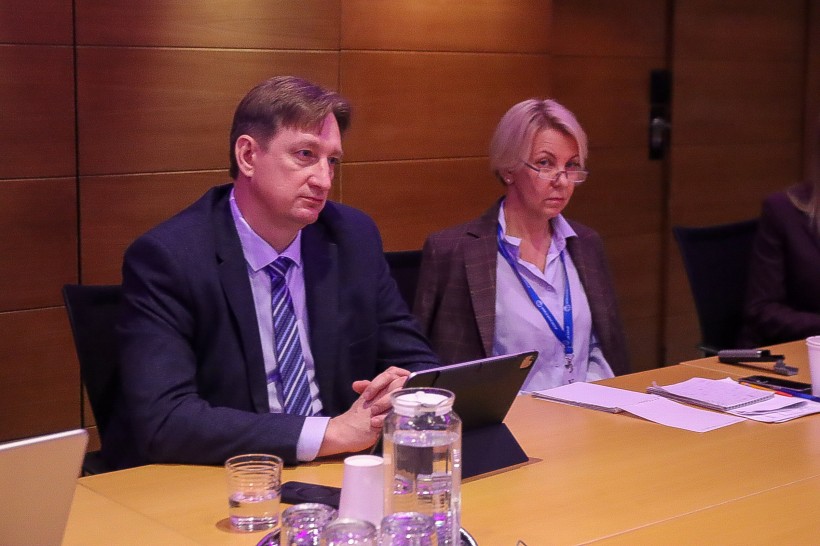
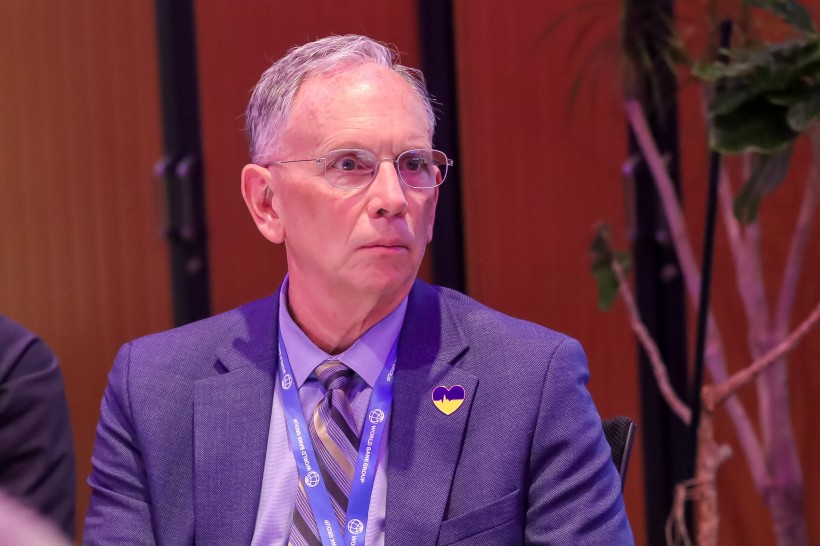
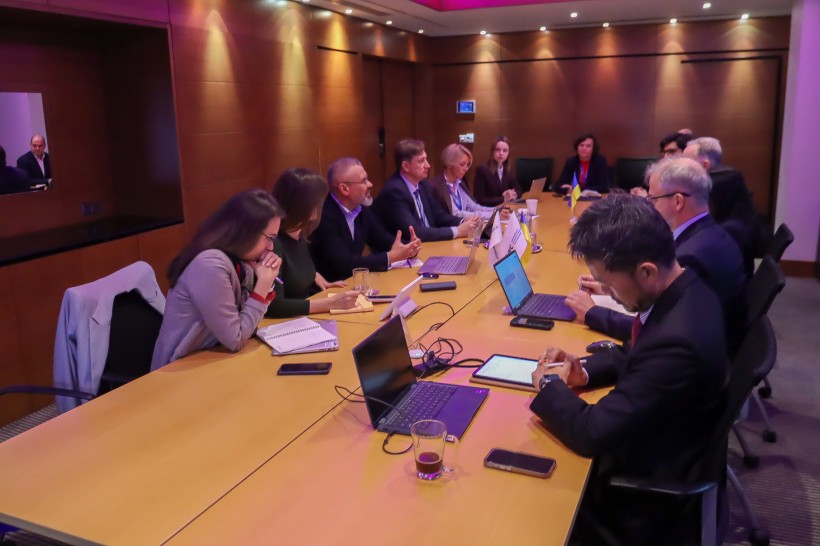
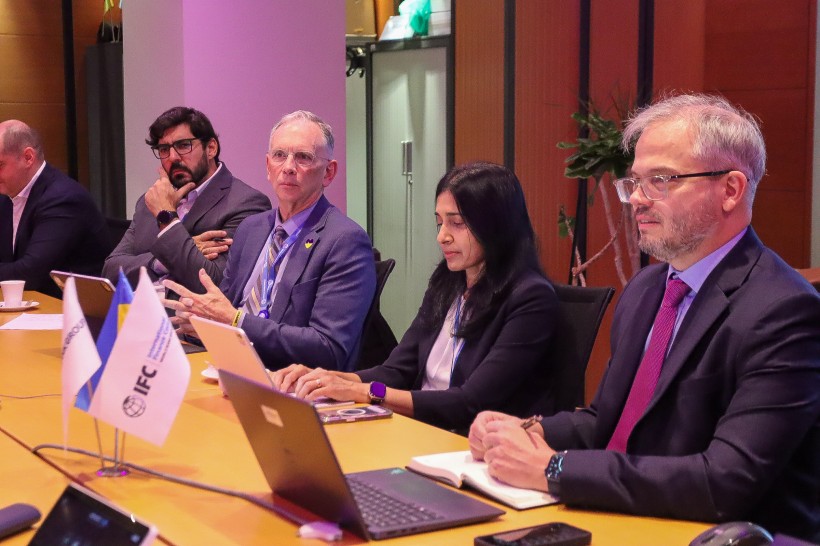
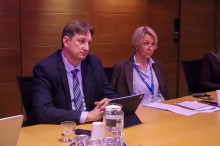
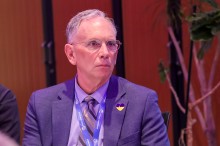
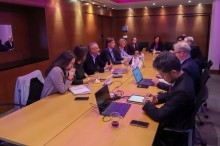
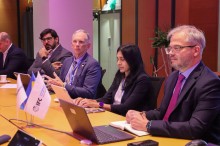
Piloting and the further rollout of specialised upper secondary education, the development of early childhood education, and the network of Campuses of Excellence (CampeX) were the key topics of a meeting between Minister of Education and Science of Ukraine Andrii Butenko and his deputies and a World Bank delegation — Bob Saum, World Bank Division Director for Eastern Europe, and Aparnaa Somanathan, World Bank Regional Director for Human Development in the Europe and Central Asia region.
The portfolio of joint MoES–World Bank projects amounts to $937 million.
“For us, what matters is not only the scale of financing. What matters most is that this partnership helps us both preserve access to education during the war and continue the systemic reforms necessary for Ukraine’s recovery and European transformation,” said Andrii Butenko.
“Investments in education become visible over the long term. Our partnership with the Ministry is focused precisely on that: not simply supporting the education system today, but laying the foundation so that every investment — in early childhood education, in specialised upper secondary school, in higher education — keeps working for Ukraine’s economy and human capital for years to come,” said Bob Saum, World Bank Regional Director for Eastern Europe.
The Minister thanked the Bank for its support through the PEACE project, which helps maintain the financial sustainability of the education system. “Your investment in Ukrainian teachers is a direct investment in preserving our human capital and in Ukraine’s future,” he said.
School and Vocational Education: A Decisive Stage of NUS
The World Bank continues to support the implementation of the New Ukrainian School (NUS) reform. The transition to specialised upper secondary education is the largest structural change to the school system in decades, the Minister of Education and Science of Ukraine noted. Nationwide implementation of specialised upper secondary education will begin on 1 September 2027. The reform is now entering its most intensive phase — the transition from pilot to system-wide implementation — making partner support at this stage decisive.
The World Bank supports the reform through the LEARN programme, with a total volume of $737 million. The programme has two components: budget-support financing tied to results (a Program for Results, PforR, instrument) worth $675.9 million, and a grant component worth $61.1 million.
The grant component supports the piloting of NUS in Grades 8–12: STEM and ICT equipment is being procured for educational institutions, and Grade 9 learning materials are being prepared for 145 pilot schools. The NUS Implementation Office (NIO) was established to coordinate the reform.
Under the Program for Results (PforR), with a total volume of $675.9 million, support is focused on five key drivers of education service delivery:
safety, including the availability of shelters as a precondition for in-person learning and inclusive student transportation;
updating learning materials in line with the NUS model;
preparing teachers to meet NUS standards;
institutional capacity to make management decisions based on reliable student- and school-level data;
preparing early childhood education staff in child-centred, play-based pedagogy.
Among the priorities in vocational education, the Minister also named modern programmes and equipment, partnerships with employers, and flexible educational pathways for young people and adults.
Early Childhood Education: Investing in Children Is Investing in the Economy
Under the Ministry of Education and Science of Ukraine’s first nationwide initiative, “First Steps Forward,” which mobilises investment to transform the early childhood education sector and is implemented with World Bank support, the selection of communities for the first phase will begin shortly. The initiative is delivered through the LEARN programme (Lifting Education Access and Resilience in Times of Need in Ukraine).
The programme will help communities make use of the new opportunities provided by the Law of Ukraine “On Early Childhood Education,” develop targeted early childhood development programmes, support teachers’ professional development with a focus on working with children with special educational needs, and arrange shelters and equip institutions with furniture and equipment.
“Accessible early childhood education matters not only for children’s development, but also for the country’s economic recovery, as it gives parents — mothers, above all — the opportunity to return to the labour market,” said Minister of Education and Science of Ukraine Andrii Butenko.
Aparnaa Somanathan, World Bank Regional Director for Human Development in the Europe and Central Asia region, named the integration of mothers into the labour market as one of the priorities of World Bank–MoES cooperation. It is precisely the accessibility of early childhood education — the focus of the “First Steps Forward” initiative — that allows parents to work while being confident their children are receiving quality care and support for their development.
Aparnaa Somanathan also noted that inclusion in educational institutions should be a shared priority across all ministries.
Higher Education: UIHERP Results and the Campuses of Excellence Network
The Minister informed partners that the selection of Campuses of Excellence (CampeX) has been completed, with 12 universities joining the network.
CampeX is a result of work under the UIHERP project (“Improving Higher Education in Ukraine for Results”), worth $200 million. The project also funds the information systems that underpin admission campaigns and the administration of the National Multisubject Test (NMT).
More than a thousand academic managers have completed training in modern management methods. More than a hundred university laboratories will receive equipment to be used by approximately 47,000 students, mainly in STEM fields. Procurement of equipment for 44 universities in frontline regions is also underway.
Among the priorities in higher education, the Minister named partnerships between universities and employers, adult education, short-cycle reskilling programmes, and educational opportunities for veterans — both acquiring new skills and returning to civilian life. The parties discussed ways to sustain results and the possible continuation of the project after its completion in 2027.
The MoES is also interested in analytical and technical support from the World Bank for the transition to systemic planning of education infrastructure “from kindergarten to university.” Such planning should be grounded in demographic data, energy efficiency, and safety.
The meeting with the World Bank also addressed a plan to ensure the stable operation of digital education platforms and data-driven management systems. With UIHERP support, key information systems for admission campaigns are funded, including EDEBO, NMT, USQE (EDKI), UPEE (EFVV), and UEE (EVI). Under the LEARN programme, the modernisation of AIKOM continues, along with the creation of a dedicated online platform for administering the State Final Attestation (DPA).
The parties also discussed opportunities for the responsible implementation of artificial intelligence in education in MRIIA — for personalised learning, teacher support, and reducing administrative workload.
World Bank representatives emphasised the importance of continued support for Ukraine’s education system in every possible format. The Ministry, in turn, confirmed its readiness to fulfil its obligations under international agreements with the Bank in a timely and transparent manner.
The World Bank’s portfolio with the MoES totals $937 million. It includes the LEARN programme, “Lifting Education Access and Resilience in Times of Need in Ukraine” ($737 million), and the UIHERP project, “Improving Higher Education in Ukraine for Results” ($200 million, 2021–2027). The Bank also provides the MoES with technical assistance on resilient education infrastructure, the green transition in education, and labour-market skills development.